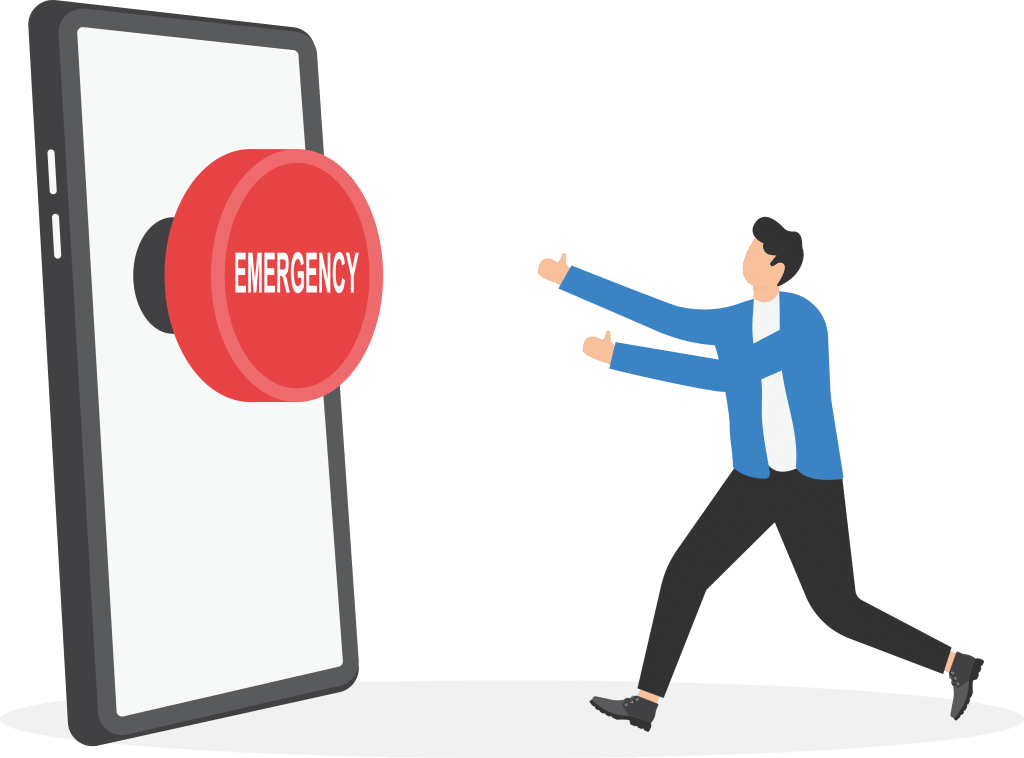
Tachypsychia and Its Impact on Motor Skills During Emergencies
Emergencies trigger a flood of responses in the human body, designed to help us survive life-threatening situations. One such response is Tachypsychia, a condition where time seems to either speed up or slow down, altering our perception in critical moments. While this can be beneficial in some ways, tachypsychia can also impair motor skills, making it difficult to perform essential tasks—such as using a phone app panic button—when we need them the most.
Understanding Tachpsychia
Tachpsychia is a physiological and psychological phenomenon often associated with high-stress or high-adrenaline situations. It is characterized by an altered sense of time, where events appear to happen in slow motion or, conversely, time seems to fly by. This altered perception is part of the body’s fight-or-flight response, designed to maximize our chances of survival by allowing us to process threats quickly and respond effectively.
Real-Life Tachpsychia Implications
Consider a scenario where someone is experiencing a home invasion. The individual reaches for their phone to activate a panic button app. However, because of tachpsychia, their perception of time has altered, and their hands are shaking uncontrollably. In this state, the individual might find it incredibly challenging to unlock their phone, locate the app, and press the necessary buttons accurately. The precious seconds lost in this struggle could mean the difference between safety and harm.
The Mechanism Behind Tachpsychia
During an emergency, the brain releases a surge of adrenaline, which can affect various cognitive and physical functions:
- Altered Perception of Time: The brain’s processing speed increases, making it feel like time is slowing down.
- Enhanced Focus: The brain prioritizes immediate threats, narrowing focus and sometimes blocking out extraneous details.
- Impaired Fine Motor Skills: While gross motor skills (large muscle movements) might improve, fine motor skills (precise movements) often deteriorate. This is because the brain redirects resources towards survival, which doesn’t typically involve tasks requiring fine motor control.
Impact on Motor Skills
Fine motor skills involve the coordination of small muscles, particularly in the hands and fingers, and are essential for tasks like dialing a phone number, typing, or navigating a smartphone app. During an emergency, the degradation of these skills can be problematic:
- Difficulty in Dialing Numbers: Trying to dial an emergency number can become a daunting task when your fingers are trembling or lack precision.
- Navigating Apps: Smartphone panic buttons, which require precise tapping and sometimes even swiping, become challenging to use.
- Entering Information: If the panic button app requires any input, such as a password or confirmation, the impaired motor skills can make this nearly impossible.
Strategies to Mitigate the Impact
Given the potential for tachpsychia to impair motor skills, it’s crucial to have alternative plans and tools in place:
- Voice-Activated Systems: Using voice commands to call for help can bypass the need for fine motor skills.
- Mobile Panic Buttons: Installing physical panic buttons in strategic locations can provide a simpler, more reliable way to alert authorities.
- Simplified App Interfaces: Emergency apps should be designed with large, easily accessible buttons and minimal requirements for navigation or data entry.
- Practice and Drills: Regularly practicing emergency procedures can help reduce panic and improve performance under stress.
Take Control of Your Response to Tachypsychia
Tachpsychia is a natural response to extreme stress, but its impact on motor skills can hinder our ability to respond effectively in emergencies. Understanding this phenomenon and planning accordingly can help mitigate its effects. By incorporating voice-activated systems, physical panic buttons, and user-friendly emergency apps, we can better ensure that help is just a touch—or a word—away, even when our bodies are working against us.
In emergencies, every second counts, and having reliable, easy-to-use tools can make all the difference. By preparing for the effects of tachpsychia, we can enhance our ability to stay safe and secure in critical moments.